When perfect solutions still fail
In many IT projects, quality is equated with technical perfection. The better the architecture, the more modern the tools, and the more sophisticated the automation – the more successful the project is expected to be.
But reality shows something different:
Even technically brilliant solutions can fail if they do not fit the systemin which they are used.
This is precisely where systems thinking in.
Without systems thinking, quality remains ineffective
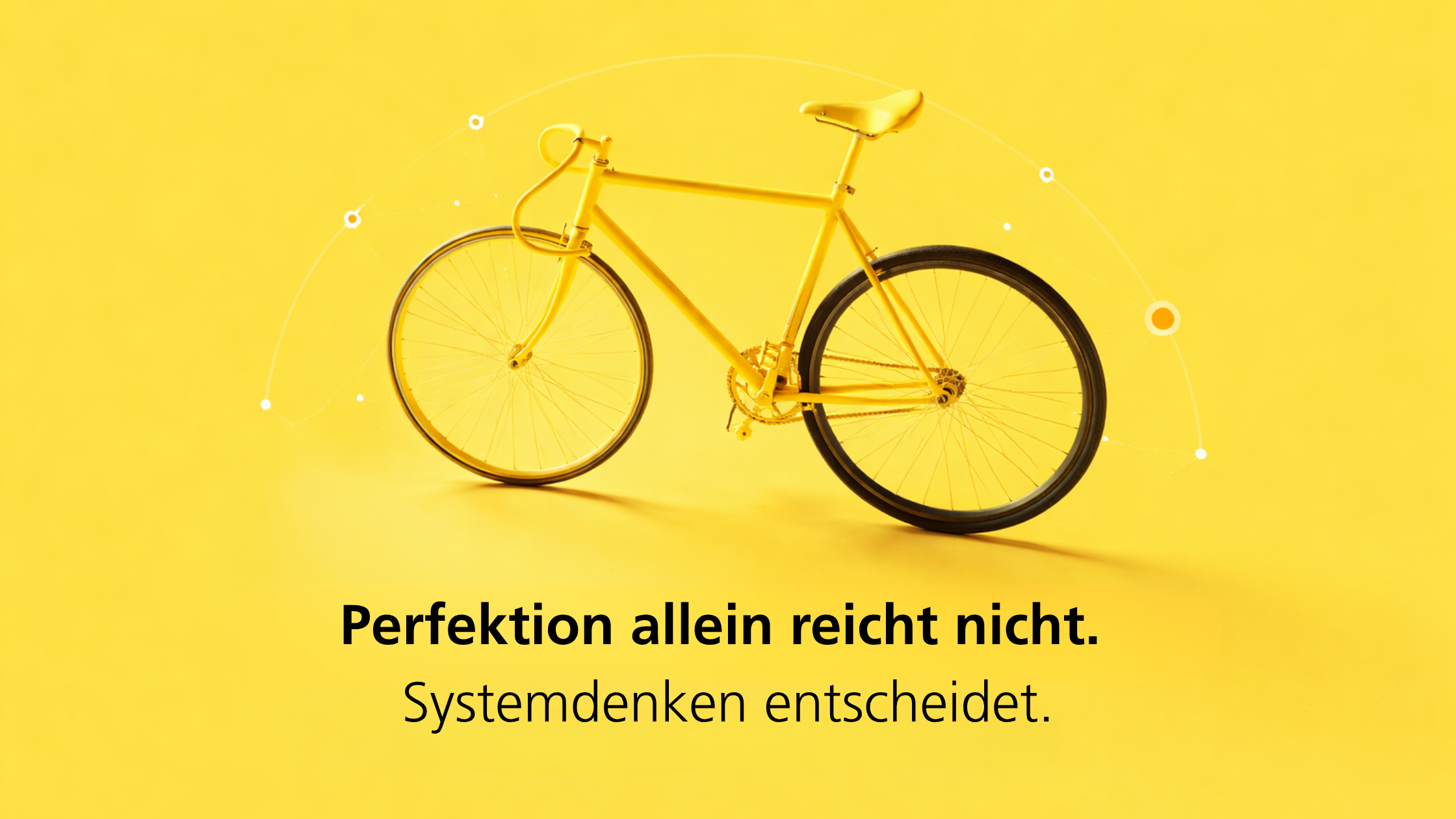
Imagine we develop a high-quality racing bike: perfectly crafted, lightweight, aerodynamic, and technically state-of-the-art.
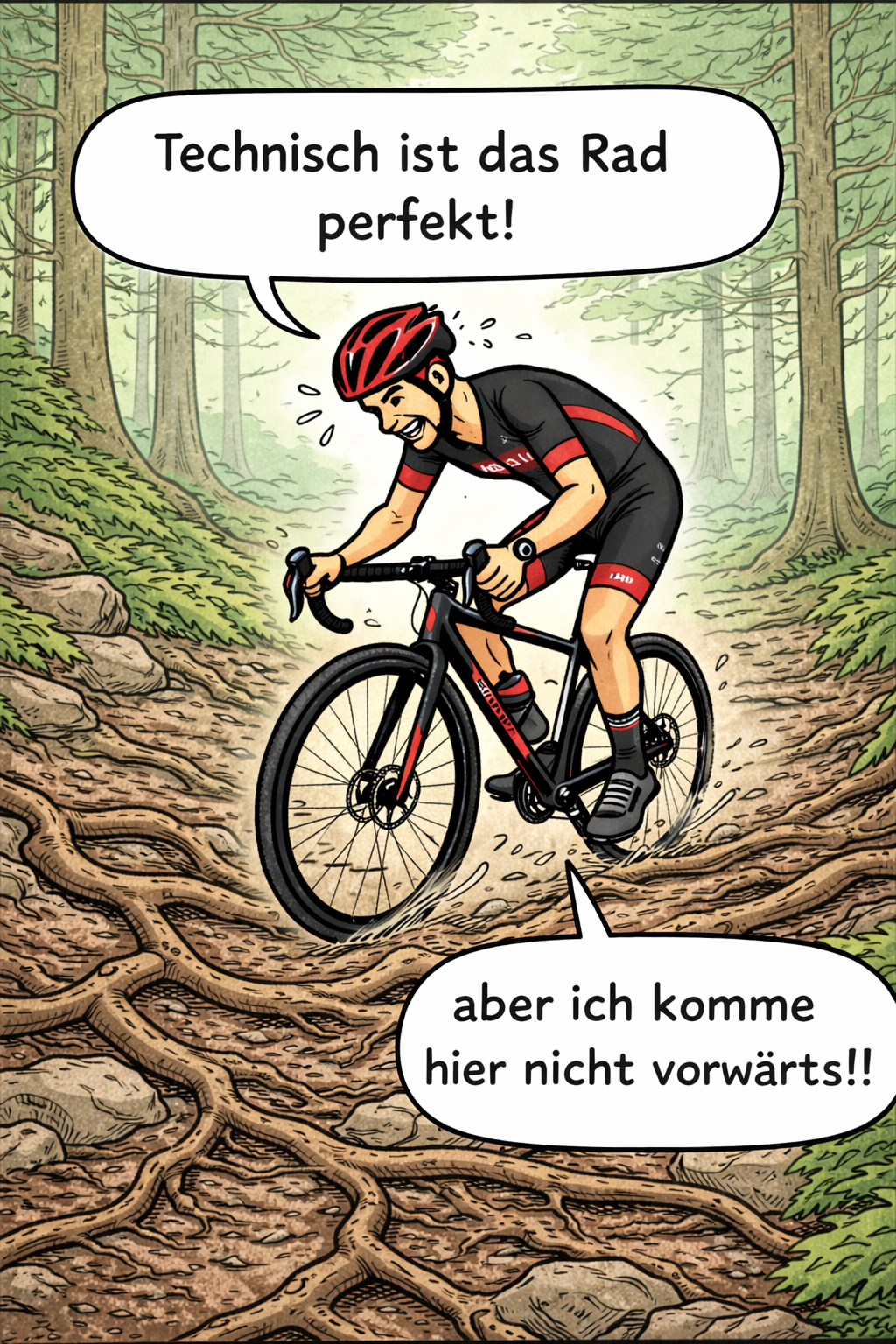
But as soon as we ride it on a rooty single trail in the forest, we quickly realize: The racing bike is not suitable for this context.
The bike is of the highest quality – but the surroundings don't suit it, or the bike doesn't suit the surroundings.
The result: Despite perfect technology, it offers no real benefit.
This is exactly what happens in IT projects.
We optimize individual components – tools, automation, architecture – without always checking whether they really fit the overall system in which they are used.
(The bicycle analogy is not entirely coincidental: As a sponsor of a Swiss junior cycling team and with several enthusiastic cyclists on the team, we sometimes think more in terms of bicycles than IT architectures.). 😉)
What is systems thinking?
Systems thinking means viewing a project, a product, or a problem not just as a collection of individual parts , but as a complete system
The focus is on the relationships and interactions between the elements – similar to an ecosystem where every change has an impact on other areas.
Instead of only considering linear cause-and-effect chains, systems thinking asks questions such as:
- What interactions exist between teams, processes, and technologies?
- What are the short- and long-term consequences of our decisions?
- How does a change in one area affect the overall system?
- And: Does the solution even fit the environment and intended use?
The focus is therefore shifting from individual components to the interaction of the entire system.
Why is systems thinking so important today?
Especially in modern software projects, complexity is constantly increasing. Systems consist of many technologies, teams work in a distributed manner, and dependencies are becoming ever more diverse.
Systems thinking helps with this:
Understanding Complexity:
Software landscapes and automation processes are becoming increasingly complex. With the use of AI, another layer of complexity is added: Systems are increasingly making their own decisions and influencing each other. A systemic perspective is therefore not only helpful, but essential for maintaining an overview.
Developing sustainable solutions:
Instead of just treating symptoms, solutions are created that work in the long term.
Recognizing risks earlier:
Those who understand dependencies can identify risks earlier and manage them better.
Strengthening collaboration:
Teams develop a shared understanding of the system, instead of just optimizing their own area.
Quality is always context-dependent
Many projects demonstrate that technological excellence alone is not enough.
Quality and automation only reach their full potential when used in the right context.
A few typical examples:
- Test automation can be technically brilliant – however, if the test cases do not cover the relevant risks, it only creates an illusion of quality.
- A powerful tool remains ineffective if it is not integrated into the team's way of working.
- Modern architecture loses its value if it does not address the actual needs of its users.
We are currently observing something similar with the use of AI-supported tools. They can deliver impressive results – for example, in generating test cases or code. However, without a clear quality strategy, suitable processes, and a shared understanding within the team, what quickly emerges is simply a new form of automation without any real added value.
Quality is therefore not an absolute value. It must always be considered in the context of requirements, use, and environment
Just like with a racing bike:
On the right track it's a dream – in the forest it becomes a burden.
Working within the system vs. working on the system
Systems thinking also means consciously adopting two perspectives.
Working in the system
This concerns the daily operational work within the existing framework:
- Execute test cases
- Maintain automation scripts
- Fix errors
- Releases accompany
This work ensures that the system functions in everyday life.
Work on the system
Here, the framework itself is questioned and further developed:
- Rethink testing strategies
- Adapting automation architectures
- Improve processes
- Redesigning roles and collaboration
The goal is to further develop the system so that it remains efficient in the long term.
In practice, both.
Those who only work within the system often remain stuck with short-term solutions. Those who only work on the system quickly lose touch with operational reality.
The balance between the two perspectives is crucial.
The road bike example illustrates this well:
when we fix a flat tire or replace parts on the trail, we are working within the system.
However, if we ask ourselves whether a mountain bike might be the better choice, we are working on the system.

Conclusion: A holistic view makes the difference
Systems thinking is not a theoretical concept, but a crucial success factor for modern projects.
It helps to understand connections, structure complexity, and make decisions that have a lasting impact.

Especially in software quality and automation, it's not just about optimizing individual components. The crucial thing is functioning overall systems that deliver real added value in the right context.
In many projects, we see that crucial progress occurs when organizations begin to look at their system holistically – instead of just improving individual parts.
As a consulting firm, we support our clients in adopting precisely this perspective: structuring complexity, making dependencies visible, and developing solutions that are sustainable in the long term.
Because quality is not created on paper or glossy foils – it reveals itself in real-world use.
If you would like to learn more about this, or to discuss it further, please feel free to contact me.
Tomas Mitrovic
via Infometis: infometis.ch/infometen/tomas-mitrovic
via LinkedIn: www.linkedin.com/in/tomasmitrovic