Test Automation Trends 2023 from a Swiss Perspective
None of us want to miss out on a trend. Especially not when it involves technological innovation that could potentially make our work easier and help us overcome challenges.
This is likely the reason why so many sources publish the latest trends every year. We sifted through analyst reports, surveys, and trade journals to ensure we didn't miss a single trend. Most importantly, however, was the dialogue between our experts and our customers and partners. The result is our top 4 test automation trends for Switzerland.
Few topics are entirely new; rather, we anticipate a significant improvement in technology or increased demand in the Swiss market environment in 2023.
Here they are, our test automation trends for the current year 2023:
Artificial Intelligence (AI) and Machine Learning (ML) in test automation
AI testing certainly isn't a new hype topic in the testing community, even in 2023. The possibilities of such technologies have become widely known, especially since ChatGPT. There seems to be nothing standing in the way of their use. But what does this mean specifically for test automation?
The following examples illustrate specific use cases. We've deliberately kept them brief, as this trend alone deserves its own blog post :-)
AI tools like ChatGPT support test engineering by
helping people create stable and highly dynamic test cases, for example by automatically generating code or sub-elements such as regular expressions.
Faster test creation and increased stability in test execution:
A multitude of testing tools leverage the capabilities of AI and ML to quickly automate test cases and – most importantly – execute them reliably, even if relevant objects have changed. These capabilities are further supported by another trending topic: the use of cloud services. The cloud enables customers to use testing tools on demand, ensuring they are always up-to-date and continuously trained.
Observability and monitoring as quality assurance measures:
Definitions and buzzwords abound in this area, such as AI testing, production testing, etc.
In short, machine learning approaches help us manage the incredible volume of data generated when using software. Only with this technical support can we learn from this goldmine of data and draw conclusions that improve service quality and, consequently, customer satisfaction. Things get really exciting when we leverage this potential beyond the boundaries of test systems and production.
Consideration of all quality characteristics
Test automation has historically focused primarily on functional aspects. However, the ISO 25010 standard for software quality criteria has long recognized that software quality is defined by significantly more perspectives.
Focusing on non-functional criteria has always been important. Increased market demands and improved technological support are driving the trend toward implementing more holistic test automation strategies. The following areas, in particular, stand out:
Performance Testing
Certainly the most established topic in the field of non-functional test automation. More and more companies are establishing specialized teams or collaborating with performance engineers like Infometis to ensure customer satisfaction. Performance test tools support the latest technologies and are increasingly being integrated into the development process as part of continuous performance testing.
Security Testing
Especially when it comes to preventing vulnerabilities and security gaps, security testing is now an indispensable and continuous process. Security testing approaches can therefore be implemented at both the development and integration levels, providing early and comprehensive indications of potential risks across all services.
Accessibility Testing
Ensuring accessibility in the virtual space is no longer just a nice-to-have. From 2025 onwards, there will also be a legal requirement to guarantee it. It's high time that a corresponding landscape of tools and resources is established. In addition to tools specializing in compliance with standards and best practices, supporting functions are increasingly being integrated into proven test automation frameworks. This is a crucial prerequisite for establishing accessibility testing not as a one-off event, but as a continuous component of software development.
You can learn more about this topic in the blog post "Digital Accessibility Part 1 – What is Accessibility?"
We also describe in the blog article "Sustainability is one of the software quality criteria " why, from our point of view, it makes sense to extend the quality characteristics of ISO 25010 to include sustainability and governance.

Security Testing
Maintaining adequate IT security measures is a crucial aspect of every business. Particularly in the area of application security, there is often potential to implement protective measures as an integral part of every change. This requires tools that can be tailored to a company's needs and seamlessly integrated into the development process.
The trend is moving away from a one-time assessment shortly before go-live through a penetration test, towards continuous monitoring for potential IT security vulnerabilities. Therefore, the trend is moving towards both extending existing tools, especially in the area of development platforms, to include application security capabilities and improving their integration options.
.png)
DevOps, but done right
If one theme recurs among the aforementioned trends, it's the integration of technological capabilities into a continuously improving software development process. While "continuous everything" often sounds simple in theory, its effective implementation requires both technical and methodological maturity. DevOps principles are the right approach to enabling modern software development.
Software quality is an essential success factor and therefore belongs just as much in a DevOps approach. Whether we call it Continuous Verification, Built-in Quality, or something else, the focus is on empowering a DevOps team to collectively assume responsibility for quality and to align its technical resources with its needs.
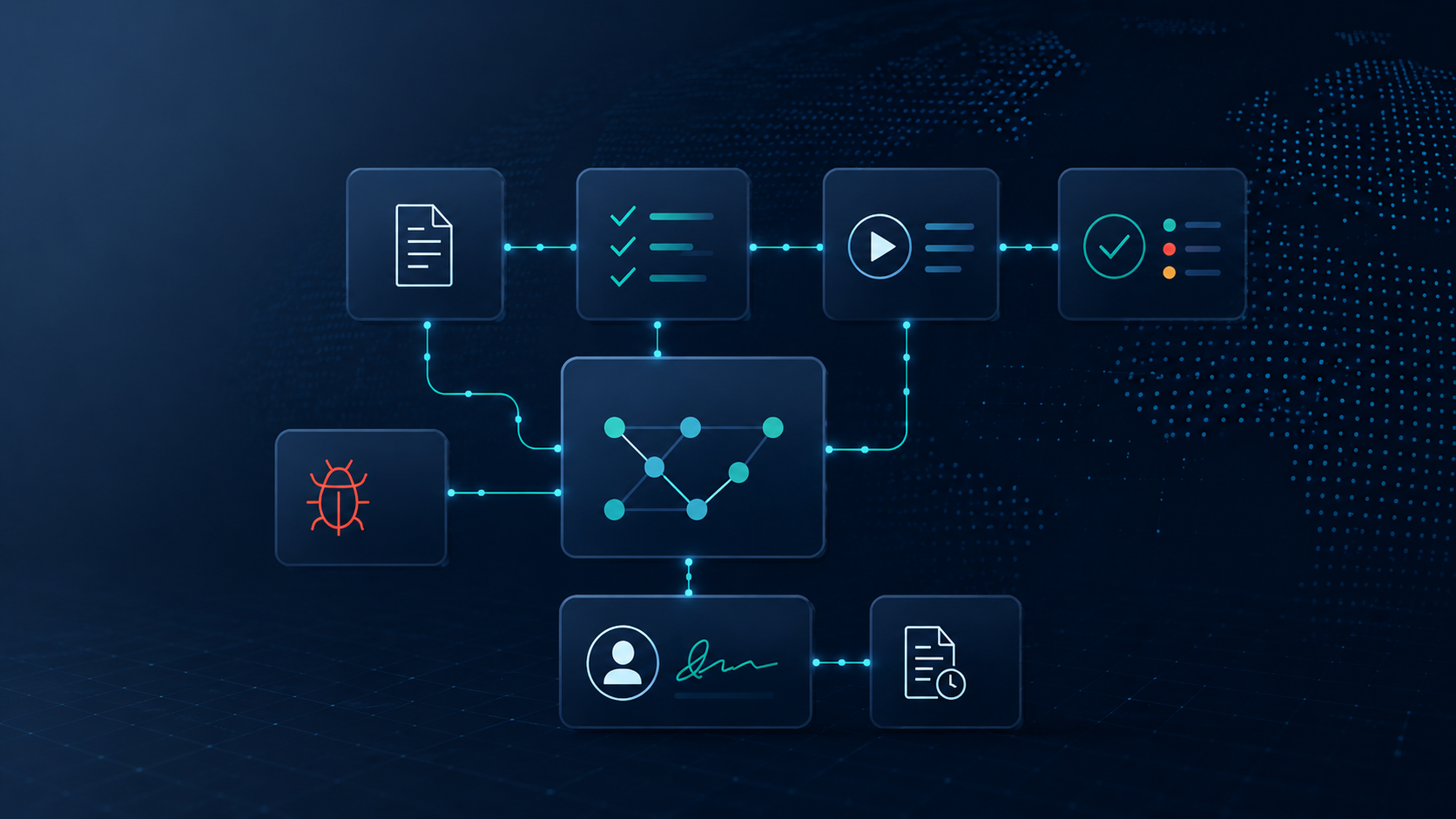
The following overview demonstrates that such a holistic approach is possible for all quality criteria. The next step is to align existing DevOps processes and pipelines accordingly, or to continuously optimize them to meet product needs. The good news is that the various vendors have recognized that they must provide the necessary prerequisites to be recognized as a modern tool.

Learn more?
Would you like to learn more about the trends mentioned? We would be happy to explain to you personally how the discussed trends can be implemented in a targeted and sustainable way.
The best thing to do is have a virtual coffee with Pascal