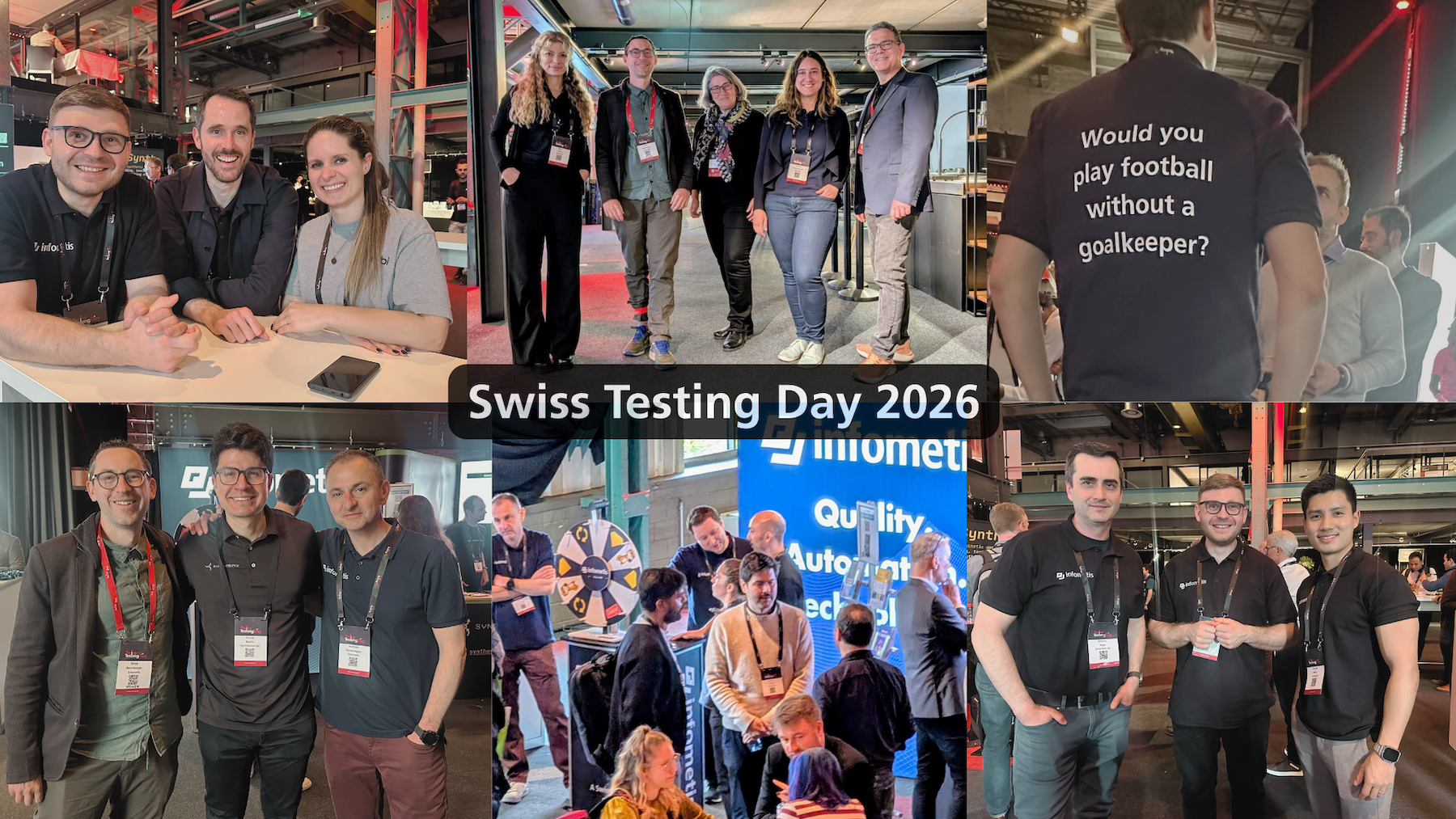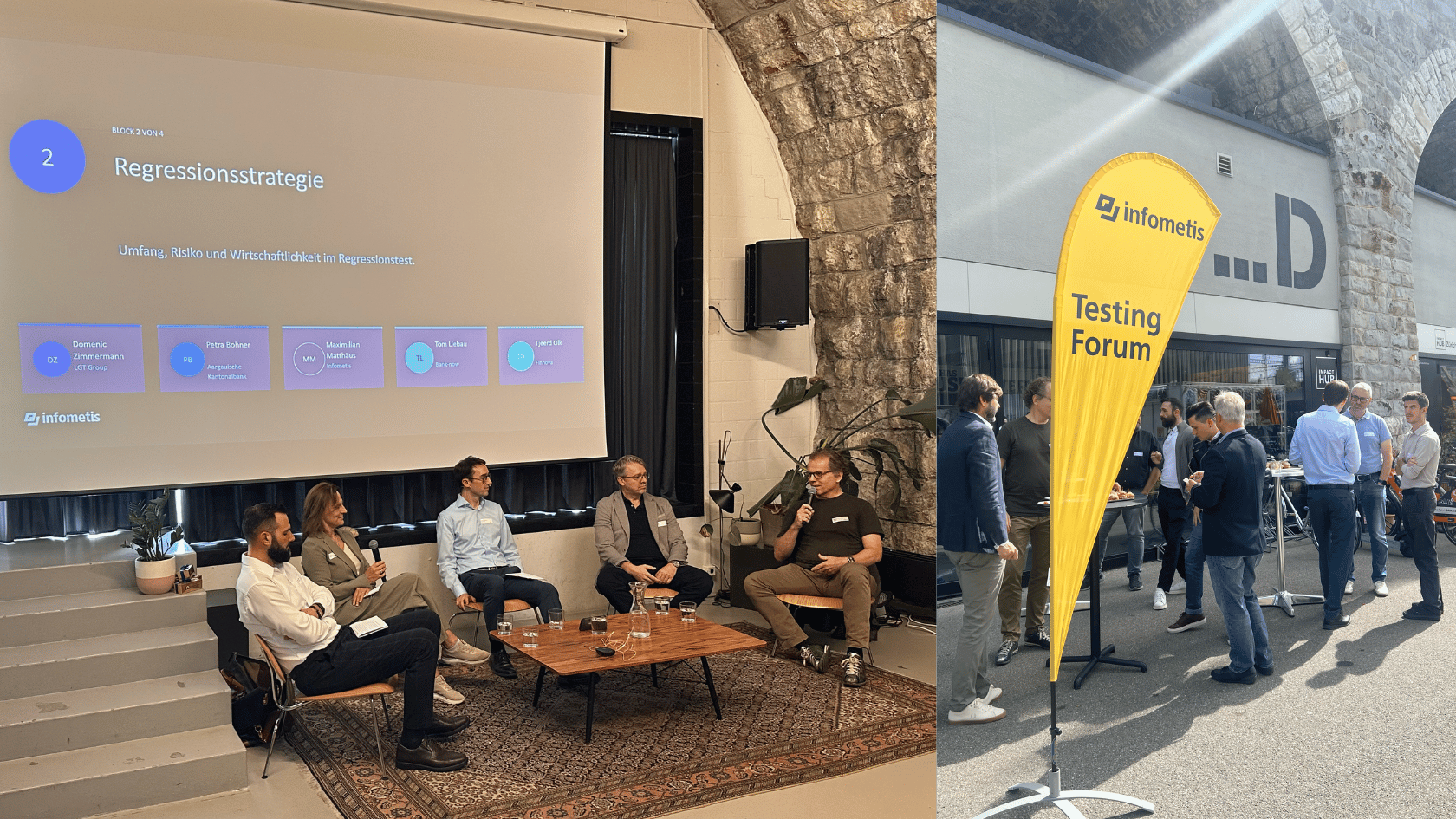

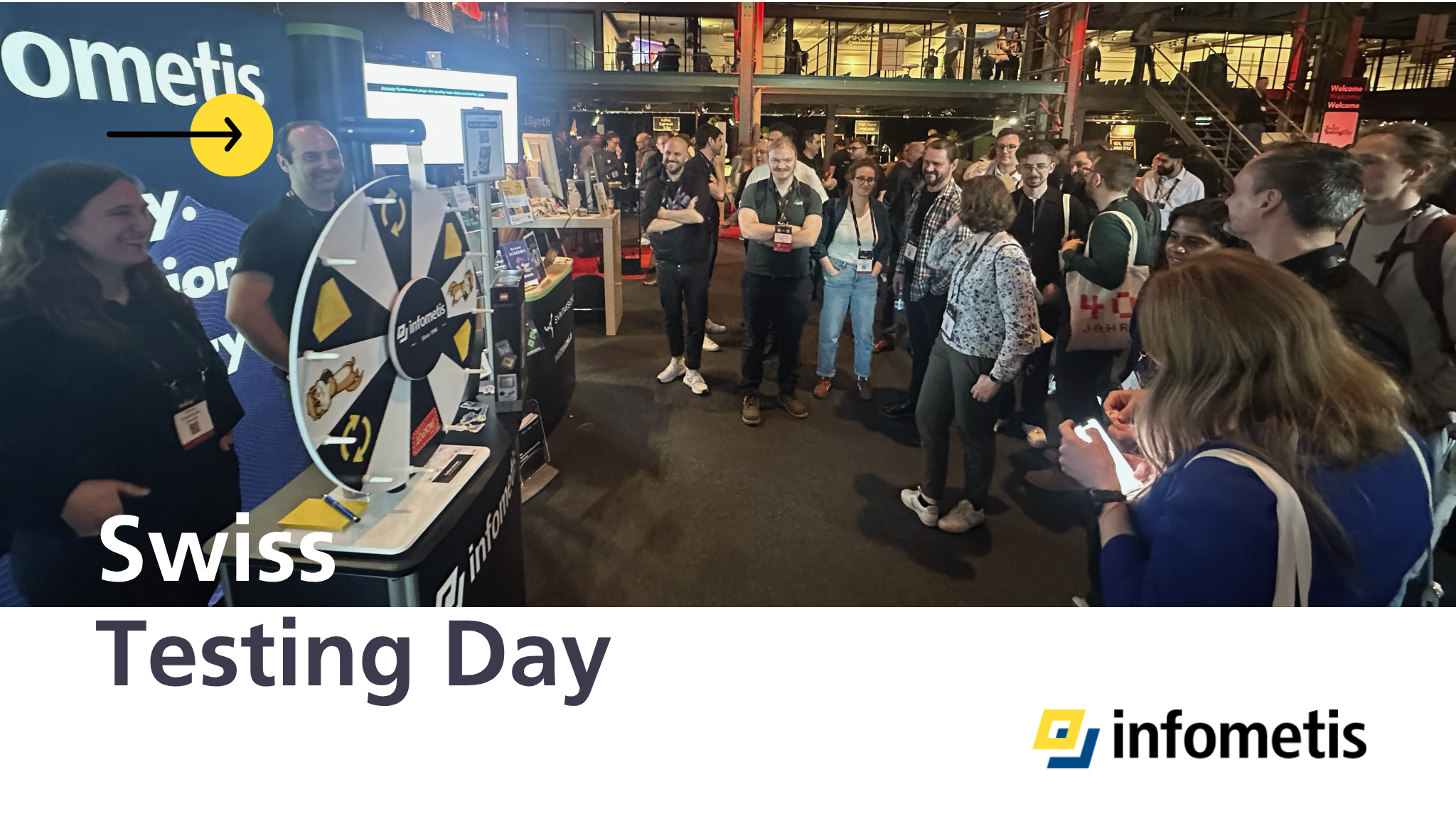
The Swiss Testing Day 2026 has once again shown that testing is undergoing a transformation.
With the increasing use of artificial intelligence, the focus is shifting: away from purely technical quality assurance towards a discipline that takes greater account of responsibility, trust and context.
In addition to many exciting sessions, we have compiled selected learnings from two keynotes and a central theme.
Less is more: Targeted reduction of test overhead
In his keynote address, Elmar Jürgens highlighted a problem that many organizations are familiar with:
a massive "test overhead".
Over the years, thousands of tests are generated that offer little added value. They no longer find any errors, but cause considerable maintenance and tie up resources.
Our key takeaway: Testing needs focus, not quantity.
The underlying approach is a consistent Pareto optimization:
- Focus on tests with maximum impact
- Reduction of redundant or outdated test cases
- Deliberate manual review of potential edge cases
The goal: A lean, efficient testing landscape that actually contributes to quality instead of just managing it.
AI in testing: Context matters
Bertrand Meyer also highlighted an important perspective:
Not all software places the same demands on quality and security – and this is precisely what determines how effectively AI can be used.
He distinguishes three categories:
Type A – Acute
life-critical systems, for example in medical technology
→ Use AI only with extreme caution
Type B – Business:
Business-critical systems, for example in the financial sector
→ AI can provide support, but requires clear control, transparency, and security checks.
Type C – Casual
everyday applications
→ This is where the greatest potential for AI-supported automation lies.
This model helps to consider the use of AI in a differentiated way – instead of making blanket decisions.
Cross-cutting learning: Testing becomes a trust factor
In addition to the individual presentations, one central theme became clear throughout the entire event:
Testing is evolving into a trusted authority in dealing with AI.
The focus is no longer solely on functional tests, but on questions such as:
- Can we trust the decisions of a system?
- How do we deal with bias and unexpected behavior?
- Who is responsible for AI-based systems?
This also shifts the role of testing:
- from pure error finding
- towards governance, risk assessment and quality in a broader sense
AI in testing: Support instead of replacement
Another clear pattern:
AI is not only used in the product, but increasingly also in the testing itself.
Typical areas of application include:
- Generation of test cases
- Analysis of error patterns
- Creation of test data
This reveals a realistic picture:
👉 AI complements testing – but does not replace it.
This changes the role of testers:
- less manual execution
- more control, evaluation and decision-making
Conclusion
The Swiss Testing Day 2026 made it clear that quality assurance today is more than testing in the classical sense.
It's about:
- Focus instead of mass testing
- context-dependent use of AI
- and above all, about trust in systems
Or to put it another way: The central question is no longer just "does it work?" but increasingly "can we rely on it?"