Infometis TDO Product Update: STEP Integration
The combination of test orchestration and test data management
In times of increasing complexity in software development and test automation, simply executing test scripts is no longer sufficient – the availability and quality of test data is often the biggest bottleneck. This is precisely where the integration between the Step test automation framework and the TDO test data management solution comes in: While Step handles the orchestration and execution of tests, the Test Data Orchestrator ensures that the necessary data centrally managed and available .
What is Step?
Step is a modern platform for software automation that enables orchestration, reporting, integrations and scalability across various technology disciplines.
It allows reusable automation building blocks to be combined with tools like Selenium, Playwright, Cypress, and others – in both code-based and no-code approaches. Step.dev
thus offers a central control unit for testing, RPA, monitoring, and more, all on a single platform.
What is Infometis' Test Data Orchestrator (TDO)?
TheDer Test Data Orchestrator is a solution for the centralized control and management of test data, conveniently accessible as an add-on within your Jira environment.
It allows you to register, organize, reserve, and access test data from any source (e.g., synthetically generated or from other systems) directly within Jira or externally via a REST API.
This ensures that manual testers, automation tools, and test data generators all access a common, transparent platform.
The challenge:
Many teams face similar problems:
- Automated tests (e.g., with Playwright, Selenium, etc.) have little access to stable, suitable test data.
- Manual testers work with different data sets and tools – silos are created.
- Even when data is generated, a central and test-tool-independent overview, traceability, and reusability are often lacking.
- In banks, insurance companies, or regulated environments, the use of production data is prohibited – synthetic data must be used.
Solution: This is how integration with STEP works
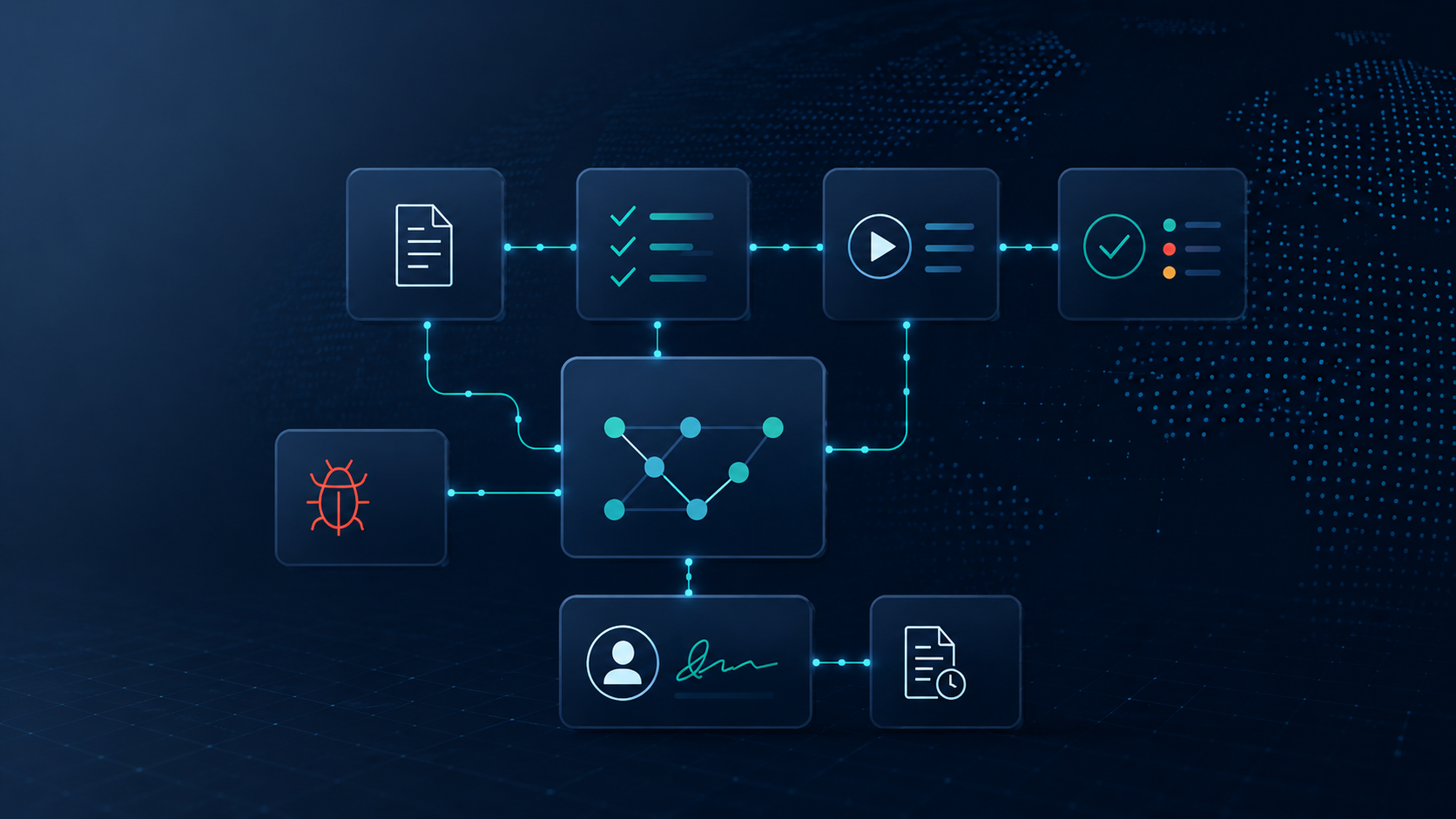
- A test data generation script or tool (e.g., TAMI) generates synthetic test data.
- The generated data records are assigned unique IDs/keys and registered in the TDO.
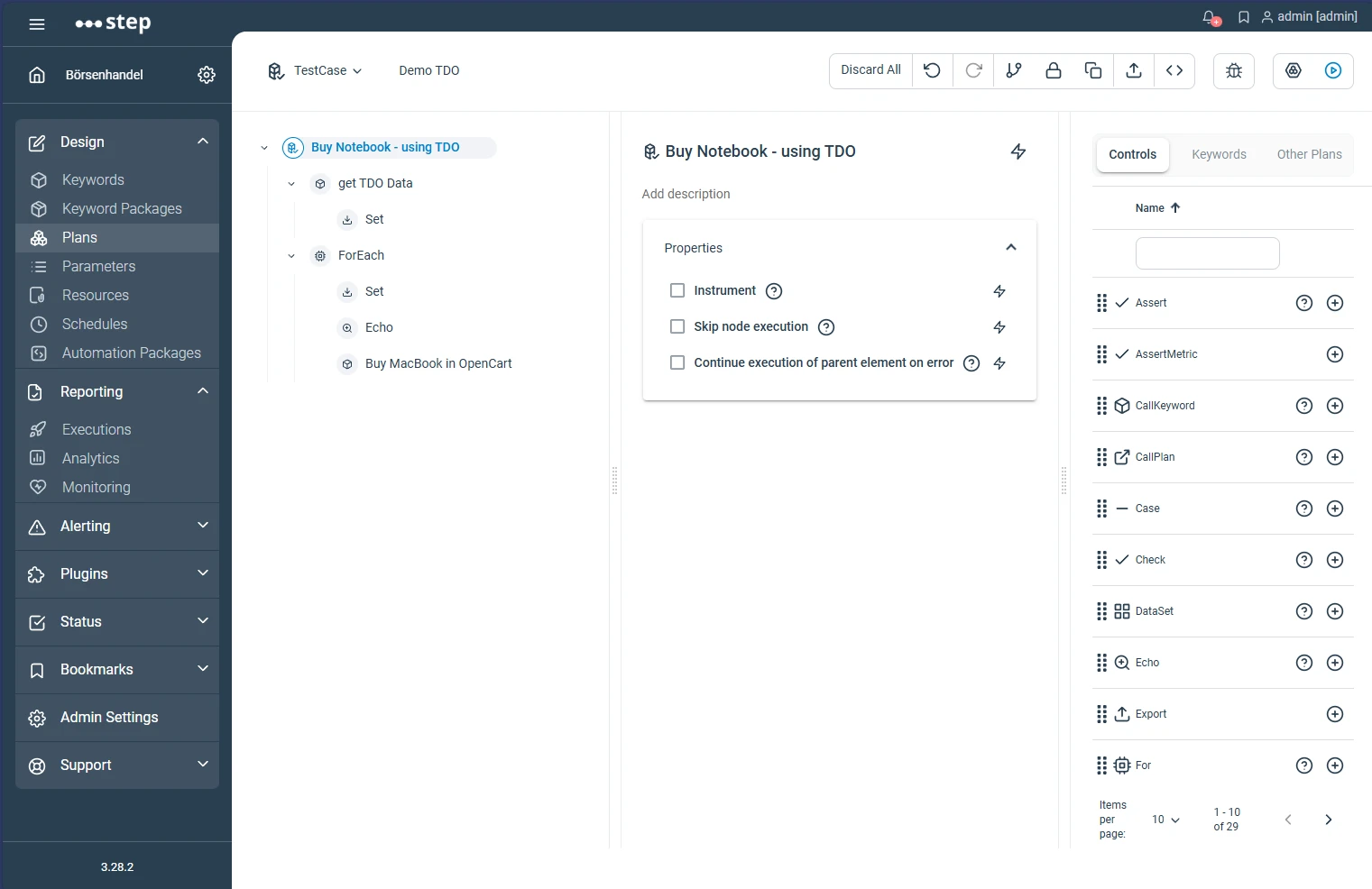
- During the test orchestration run, step retrieves the stored test data keys using a previously provided integration.
- step uses the supplied keys and executes the automated tests with them – e.g. with Playwright, Selenium, etc.
- Testers/teams have a transparent overview of reserved, used or free test data sets at all times via TDO – and Step reliably takes over the execution.
Why this is a game changer
- High efficiency: No more waiting for suitable test data – Step takes over execution immediately as soon as data is available.
- Trust & Reusability: Test data is managed centrally – avoiding duplication of effort and inconsistencies.
- Scalability across tools and disciplines: Step, as an orchestrating platform, can use any automation backend, while TDO aggregates data sources for manual and automated testing.
- Regulatory compliance: Especially in regulated industries (banks, insurance), data usage can be transparently tracked.
Conclusion & Outlook
The combination of STEP and TDO opens the door to next-level test automation: no longer just tests, but a fully integrated test pipeline with data management. Organizations that structure their testing process in this way achieve measurable benefits in speed, quality, and governance.
Would you like to know how to implement this solution in your organization? Contact us or schedule a demo of Step and TDO.