Experience report: Inspiration and innovation in Zurich
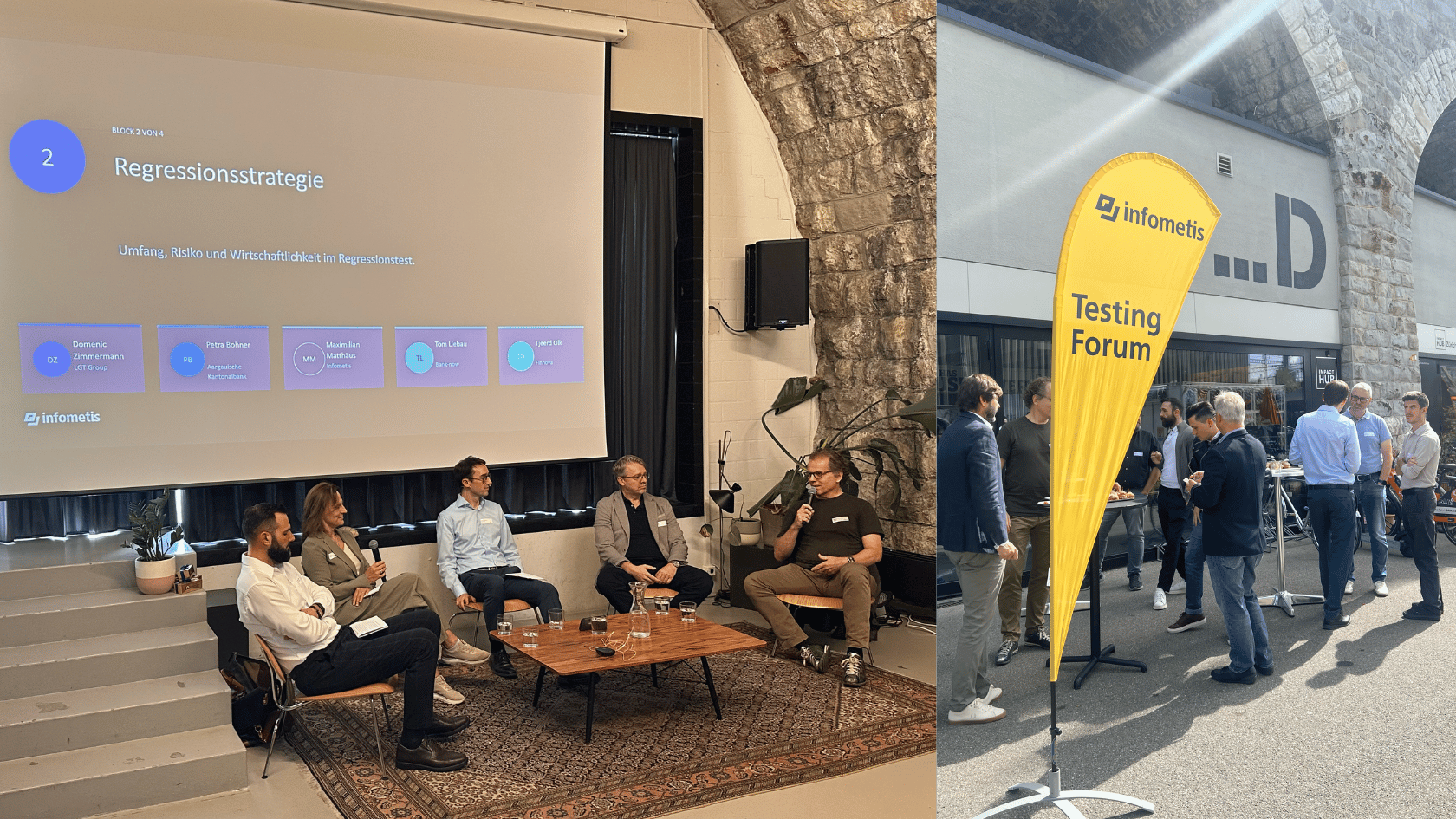
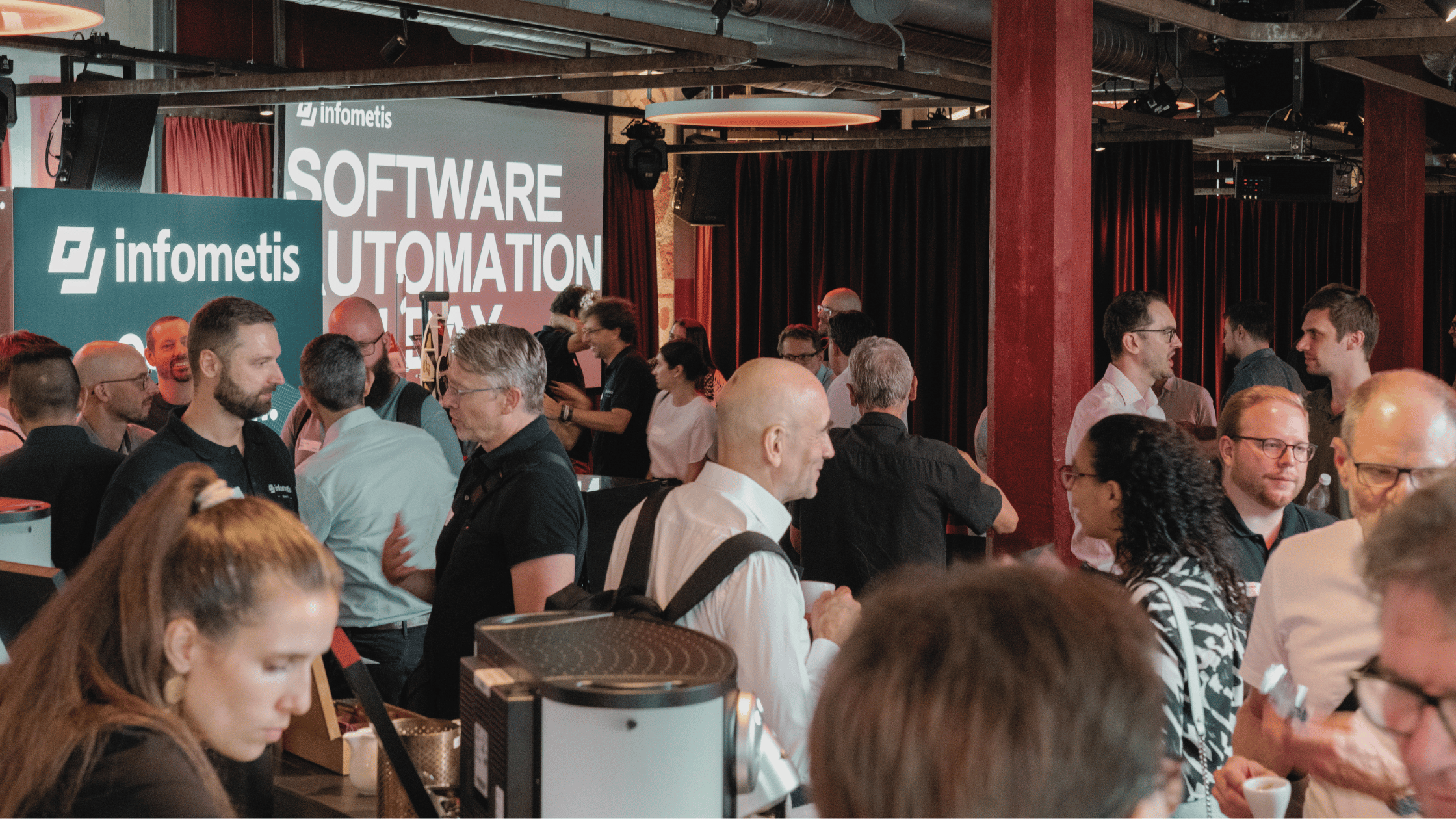
We stand for automation and quality. Therefore, it was a natural step for us to support the Greatest Quality Convention 2025, a leading conference in this field. On May 23rd, the power plant in Zurich was transformed into an inspiring meeting place for the international quality community.
The conference brought together experts from around the world and provided a perfect setting for exchanging ideas on the latest trends and challenges in software quality. From testability and data visualization to AI and data science testing – the diversity of perspectives impressively reflected how broad and profound our field has become.
Maria Kedemo: Testability as quality of life
Maria Kedemo's presentation, "Improving Quality of Life and Work through Testability," brought a refreshing perspective to the discussion about the importance of a solid foundation. Her central message: Testability is quality of life – if it is ignored, colleagues, the product, and the company suffer.
The 5 critical problems of poor testability:
- Late bug detection: Critical bugs are found late because of a lack of trust in the testing environment.
- Undiscovered, occasional issues: Problems only occur under specific conditions and often remain undetected.
- False trust: Green tests without sufficient context lull teams into a dangerous sense of security.
- Missed learning opportunities: Important insights are lost due to poor testability.
- Burnout: The daily struggle for proper testing leads to team exhaustion.
INFOMETIS SERVICES: Testing Assessment, test data management
Maria's approach to the solution:
Make testability measurable through context-specific metrics such as setup time, actual testing time, and the number of feedback loops. Even more importantly: tell stories. While metrics reveal points of friction, stories convey the emotional impact and make testability tangible for stakeholders.

Gojko Adzic: Lizard Optimization – The Power of the Unexpected
Gojko Adzic: Lizard Optimization – The Power of the Unexpected
Gojko Adzic's "Lizard Optimization" presented an innovative method that combines exploratory testing, observability, and product experimentation.
The starting point is the extended bug feature model:
- Bugs: The system is not doing what developers and users expect.
- Features: The system does what developers and users expect.
- Mismatches: The system behaves as expected by developers, but not as expected by users.
- Exploits: The system behaves as expected by users, but not as intended by developers.
The LZRD process:
1. L - Lizard Alert: Learning how people "misuse" the product
2. Z - Zoom In: Focus on a specific behavioral change
3. R - Rescue: Remove obstacles to user success
4. D - Double Check: Identify unintended consequences
Practical example: A new model of washing machine in China saw a high number of returns. Investigations into the reasons revealed that the machine broke down when washing potatoes. This contrasted sharply with the previous model – a classic "exploit" – which simultaneously highlighted new opportunities.
INFOMETIS SERVICES: Observability and monitoring, requirements engineering & business analysis
Laveena Ramchandani: Testing meets data science
Laveena Ramchandani's presentation on "Unlocking the Power of Data Science through Testing" addressed an increasingly important topic. With rising investments in Big Data, AI, and Data Science, software testers are becoming ever more crucial for test data provision and model testing.
Three key questions for data science testing:
1. What is a data science model?
- Statistical "black box" with structured, semi-structured and unstructured data
- Not entirely transparent, but testable
2. How do I test a model?
- Provide test data sets
- Experiment with different parameters: typos, special characters, edge cases
- Exploring safe and unsafe areas with threshold values
- Validate input against output
- Compare historical runs for trend analysis
3. What skills do testers need?
- Refresh your statistical knowledge
- Stay curious
- Accepting "good enough and fast enough results" as a quality standard
INFOMETIS SERVICES: Increasing efficiency with artificial intelligence, test data management
Eric Proegler: DevOps and the Role of Testers
Eric Proegler's experience report on "Enabling DevOps Progress with Testers" demonstrated how crucial quality engineers are for DevOps success. Despite technical continuous deployment capabilities, manual (approval) processes, due to a lack of trust, blocked true continuous deployment.
Eric's approach:
Work with the given context (not the ideal, desired context). In his experience report, these were:
- Few E2E tests that developers trust
- Limited experience in headless shipping
- Culture around manual testing events and releases
- Risk aversion in direct product deployments
- some eggs have already been broken (past incidents)
Possible solutions:
- Cypress Framework: to break down silos between development and QE
- Loose test coupling: Making tests modifiable without pull requests
- QE Level-Up: Training teams in architectural coverage models, API testing, and test hardening.
- Alpha-Beta Testing: Selective teams for alpha and beta testing of new pipeline/DevOps features
- Documentation as-we-go: Continuous improvement of CI/CD processes
Key findings:
- People do things for reasons – change the reasons to change the results
- Give teams documentation (“recipes”) and let them “cook” – they will find bugs and ask good questions
- Technical problems are really people problems
INFOMETIS SERVICES: Test automation, Test automation as a Service
Susanne Schmidt-Rauch: The Art of Data Visualization
Susanne Schmidt-Rauch's presentation on "Information Design and the Hard Truth about Misleading Entire Organizations" was a necessary wake-up call in times of ubiquitous dashboards and metrics.
Challenges in data visualization:
Human factors:
- Only 1-2 seconds to read a visualization
- The author determines the interpretation
- Danger of (unconscious) manipulation through framing
Common problems:
- Manipulated visualizations (shortened/inverted axes)
- Errors in interpretation (cherry-picking, false causal inferences)
- Example of test coverage: If it increases, is that automatically good? It might lull us into a false sense of security
But how can we test the quality of visualizations? Susanne suggests the following metrics.
- Time to understand: How quickly do users grasp the message?
- Error rate: How often is data misinterpreted?
- Usability: System Usability Score (SUS) for dashboards
Possible solutions:
- Human-Centred Design: Early focus on users, empirical methods, iteration
- Data-to-Ink Optimization: Show only relevant information
- Visual hierarchy: Only show what is important to the story.
- Data as an organizational asset: Understanding the context, competence, and decisions of users
Susanne's conclusion: Data-driven companies are an illusion – data should inspire us and we need to talk about data.
INFOMETIS SERVICES: Quality assurance and test management, observability and monitoring

Vernon Richards: The Business Case for Testing
Vernon Richards' closing talk, "If Testers Had a Dragon's Den Pitch, Would Anyone Invest," addressed the fundamental problem of the industry: How do we effectively communicate the value of testing?
The problematic standard pitch:
"I click around and try to break things. I write a lot of test cases and track how many pass or fail. I can't say exactly what I'll find, how long it will take, or what value I'll bring. Sometimes I do such good work that you don't even notice. But I promise, I and my work are valuable and important."
Vernon argues that we should sell our testing services to our stakeholders using sales methods.
Vernon's formula for success:
Visibility + Usefulness = Remembered
Sales strategies for testers:
1. Appear as an expert:
- Focus on outcomes, not tasks
- Using questions, models, and expertise as tools
- Making context-related decisions
- Success comes from solving the right problem, not from simply completing tasks correctly
2. Talk about benefits, not features:
❌ "We have run 100 test cases"
✅ "We tested the riskiest workflows"
❌ "We achieved 80% automation coverage"
✅ "Critical logic is verified on every deployment"
❌ "We found 5 bugs"
✅ "We prevented these 5 customer-relevant incidents"
3. Understand the Stakeholders' Jobs-to-be-Done: People don't buy products or services – they hire them to complete a job.
4. Look for quick wins:
- Quickly resolve small but annoying problems
- Identify important risks before they become problems
- Unblock team members and clarify uncertainties
INFOMETIS SERVICES: Quality assurance and test management, Testing as a Service
Conclusion: Quality Engineering as a strategic success factor
The Greatest Quality Convention 2025 impressively demonstrated that quality engineering goes far beyond technical aspects and has become a strategic success factor.
Key findings of the conference:
- Testability is quality of life: Investments in testability pay off directly in productivity and employee satisfaction.
- Unexpected user behavior presents opportunities: Lizard Optimization shows how "abuse" can lead to innovation.
- Data science needs testing expertise: The AI revolution requires new testing skills.
- DevOps success depends on testers: Technical capabilities alone are not enough – people and processes are crucial.
- Data visualization is critical: Poor dashboards can mislead entire organizations.
- Testing needs to be marketed better: The value of quality engineering must be clearly communicated.
Trends for the future:
For testing professionals:
- Extended Skillsets in Statistics and Data Science
- Stronger focus on business outcomes
- Improved storytelling skills for stakeholder communication
- Pragmatic approaches to organizational change
For businesses:
- Testing as a strategic investment, not as a cost factor
- Integrating testing into all product decisions
- Focus on testability from the start
- Data-driven, but human-centered decision-making
Infometis' position in this change:
Our services – from Tosca test automation and iSynth for synthetic test data to TAMI for AI-powered testing – address precisely the challenges discussed at the conference. As your Swiss partner for automation and quality, we are ideally positioned to support your company through this transformation.
The message is clear: Quality engineering is no longer just a technical function, but a strategic success factor. Companies that recognize this and invest accordingly will have a decisive competitive advantage.
Interested in the latest trends in test automation and AI? Feel free to contact us to discuss the future of software quality.